774-261-8484 (landline) ~ 294 West Boylston St. ~ 2nd. Floor ~ West Boylston, MA. 01583
Can massage help TMJ disorder
Can massage help TMJ disorder? Here is a brief definition from John Hopkins Medicine. Temporomandibular disorders (TMD) are disorders of the jaw muscles, temporomandibular joints, and the nerves associated with chronic facial pain. Any problem that prevents the complex system of muscles, bones, and joints from working together in harmony may result in temporomandibular disorder.
Pain in the jaw is something clients come in and see me for almost daily. Here are some of the most common symptoms of TMJ pain
- Jaw pain
- Clicking or popping
- Headaches
- Ear and sinus pain
- Neck and should pain
Massage therapy is a non-invasive treatment option to help manage the pain from TMJ disorder. In this article I’m going to go over what caused joint pain. How massage therapy can help. Different types of massage techniques I use in my office. What to expect during a massage therapy session . And when to seek out help from your health care provider.
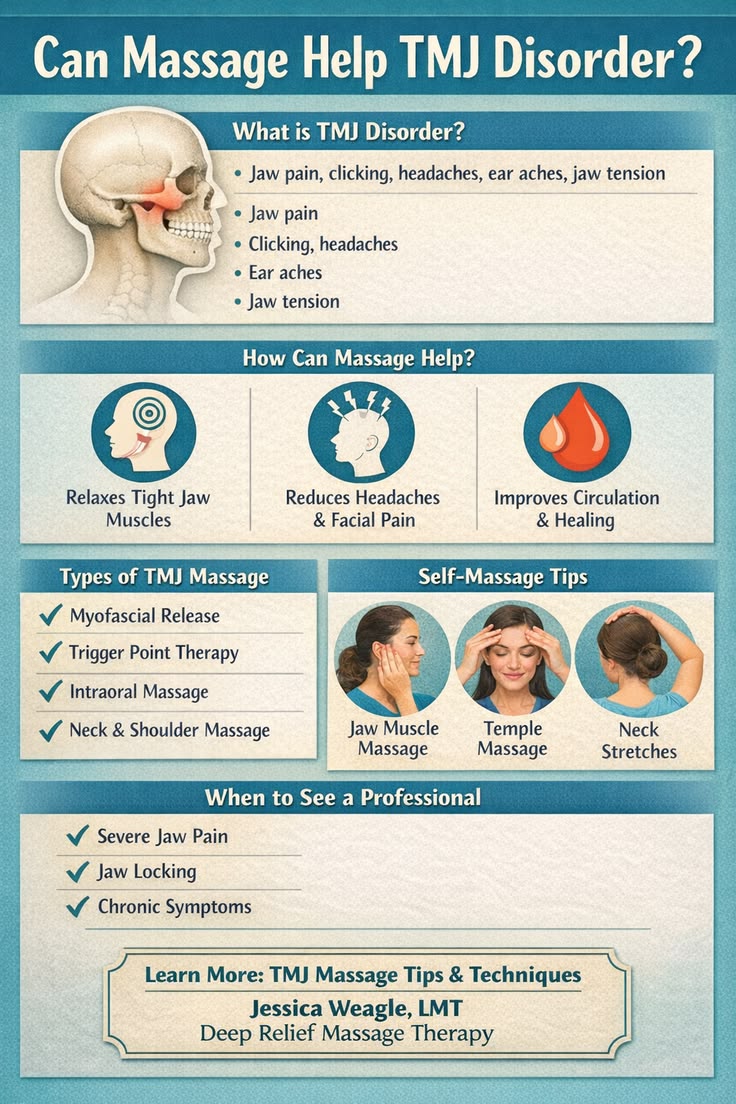
What is TMJ disorder
The temporomandibular joints connect your jaw bone to the skull. It is a sliding hinge joint. It allows your jaw to chew, talk, yawn and move side to side. Buccinator and masseter muscles are some of the strongest muscles in the body. They can develop many painful trigger points. When the jaw is under constant tension. Trigger points is your body's way of telling you that these areas are over worked and under paid. These areas of compressed nerves will cause headaches, ear and sinus pain and jaw locking. This is just a short list of what I’ve seen in my office.
TMJ pain can range from a mild nuisance to struggling to function without daily pain medication. I have worked with clients that can barely turn their necks and open the jaw because those trigger points are so inflamed and angry. It takes a lot of time and patience to help get that tissue to stop that pain spasm pain cycle.
What causes TMJ disorder
Why do people develop TMJ in the first place? The most common reason is teeth grinding, Bruxism. Most commonly done while sleeping but people do it during the daily while under stress. The masseter and buccinator are the 2 main muscles that are affected the most during constant grinding the clenching. This habit is super challenging to stop. It is so deeply rooted in the subconscious mind. Most people don’t even realize they are doing it during the day. Never mind at night.
I’ve personally always felt TMJ disorder is a symptom of having a difficult time processing stress. And a big part of the stages of sleep is processing the stresses of life. The grinding that is done at night is the hardest habit to break. So I always advise clients to pay attention to what they are doing with their face during the day. Here is an example I use a lot. When you are driving and an a-hole cuts you off. Become aware of what you are doing when you get irritated. What areas of the body do you automatically feel you are tightening up? Get into the habit of telling yourself to relax your face, neck and shoulders. When we tightened up like this, it also causes poor posture. And poor posture just adds to the pain you are feeling in the jaw. Over time you may see improvements to the head, neck and shoulder placement. This may take many months before it becomes an unconscious habit. But keep at it, with constant practice you will get there.
How massage therapy can help TMJ disorder
Massage therapy works on relaxing those muscles that are involved in moving the jaw. There will be an improvement in circulation to the area and calms down those over active trigger points. These tight over active muscles do put a lot of pressure on the TMJ joint and cause the jaw not to open correctly. Massage helps to give clients much needed relief from tension headaches, facial and ear pain. Sometimes I will add essential oil to a face, neck and shoulder massage to help give some extra pain relieving benefits. I don’t just work on the face. The upper back, back and shoulders need a lot of extra love too. All this prep work I do helps the muscles around that affected joint to actually relax.

Types of massage techniques used for TMJ disorder
Let me go over the different types of massages I offer to help you pick what may be a good option to try. Keep in mind you may need to try out a few different types of techniques before finding what's going to give you the most relief. Don’t get discouraged if something doesn’t help you feel better. There can be a learning curve.
Myofascial Release. No oil or lotion is used. It is VERY detailed and focused work. And can feel quite deep. Clients that respond best to this type of work generally tolerate deep work well. Upper back, neck, shoulders and face are getting worked on in great detail. Strokes are moving in one direction following the muscle fibers. It takes many passes to get down to the bone. And sometimes I can’t get down that far in one session safely. Plan on an hour long session.
Deep tissue massage. It is actually quite similar to myofascial release. But here are a few key differences. Oil and lotion are used. The strokes flow in multiple directions across the soft tissue. Plus I can add essential oil to this service. The areas I am working on are pretty much the same and it does take the same amount of time. It just comes down to personal preference.
Craniosacral therapy. This is a great option for those clients who don’t tolerate deep work well. It is done face up the whole time. You are fully clothed. There is NO soft tissue manipulation. This pressure you feel is about the weight of a nickel. What I am feeling for, are kinks in the nervous system hose. There can be a lot of work done on the tail bone. Before I get to the face. Over many sessions I’m getting the nervous system to fire evenly in the correct order. This will also take me an hour.
Manual lymphatic drainage. Chronic pain leads to chronic swelling around the TMJ joint. Another good option for clients who don’t like deep work. MLD is me manually pumping the extra lymphatic fluid through the system. That built up fluid pressure can cause pain around joint and nerves. The work is super light pressure with no soft tissue manipulation. Work on just the face takes 30 minutes.
What to except during your first session
During your very first session with me. There is a health history form to fill out. Then I like to spend about 5-10 minutes going over what your needs are. During this time. I explain how a session will go. It is important we are both on the same page on session exceptions. A massage that is a general full body timing wise is a lot different than detailed focused work. During the session it’s important to communicate if you don’t like pressure. But keep in mind I do have a plan on the general flow of the massage based on what I am feeling. There can be a lot of prep work that needs to be done before I get to the actual jaw.
After the session I go over what I find. How often you should come in for a treatment. Here are some general guidelines for treatment frequency. Acute pain once a week. Tolerable pain bi-weekly and maintenance massages are once every 4-6 weeks.
Other professionals to help with TMJ
Here’s some other ideas of professionals to try for TMJ disorder. These all work nicely with massage therapy.
- Acupuncture
- Chiropractic
- Physical therapy
Your dentist is important too. They will be able to see if your night time teeth grinding is affecting the health of your teeth. A custom fitted mouth guard will help to protect those teeth at night.
If your pain levels are making it difficult to function it’s time to talk to your primary care doctor about your options for pain management.
FAQ about TJM disorder
Can massage help TMJ disorder?
Can massage help TMJ disorder?
Yes it can help manage your pain. Just going to need time and patients
What muscles should be massaged for TMJ?
What muscles should be massaged for TMJ?
The main ones are the masseter and buccinator
Can massage reduce jaw clicking?
Can massage reduce jaw clicking?
Yes by helping to calm down the trigger points and getting the jaw to track correctly.
If you are in the West Boylston area with TMJ pain, headaches or tension in the face and neck. I offer customized massage therapy treatments. You can book your next massage using my Online Calendar.