774-261-8484 (landline) ~ 294 West Boylston St. ~ 2nd. Floor ~ West Boylston, MA. 01583
Painful Heel
aka
Plantar Fasciitis
Plantar fasciitis occurs when the thick band of tissue on the bottom of the foot is overstretched or overused. This can be painful and may make walking or running difficult.
You are more likely to develop this if you have flat feet, high arches, suddenly gain weight or are obese, if you run long distances especially downhill or on uneven surfaces, have a tight Achilles tendon or have shoes with poor arch support or soft soles.
This can develop in both men and women but is usually seen in active men between the ages of forty and seventy.
Symptoms include pain and stiffness on the bottom of the heel, this pain may be dull or sharp. The foot may also ache or burn on the bottom. This pain may get worse in the morning when you first begin walking, after you climb the stairs, you sit or stand for a while or after intense exercise.
What is plantar fasciitis
Plantar fasciitis: inflammation of the dense fibrous band of tissue of the sole of the foot that is marked especially by heel or arch pain.
Plantar fasciitis may develop slowly over time, or suddenly after intense activity. If you have these symptoms you should consult a doctor.
The signs include tenderness on the bottom of the foot, flat feet or high arches, stiffness or tightness in the arch of the foot, mild swelling or even redness. Your doctor may recommend pain killers or inflammation reducers, shoes with good support and massage.
Massage can help to relieve the pain and help blood flow to the foot. It will also take you off your feet for an hour which doctors also recommend.
You can help to prevent this pain by making sure you Achilles tendon and calf muscles are flexible and making sure to stretch out before you run and trying to run on a flat surface. Taking care of your body and not pushing it to far is a great way to avoid pain as well.
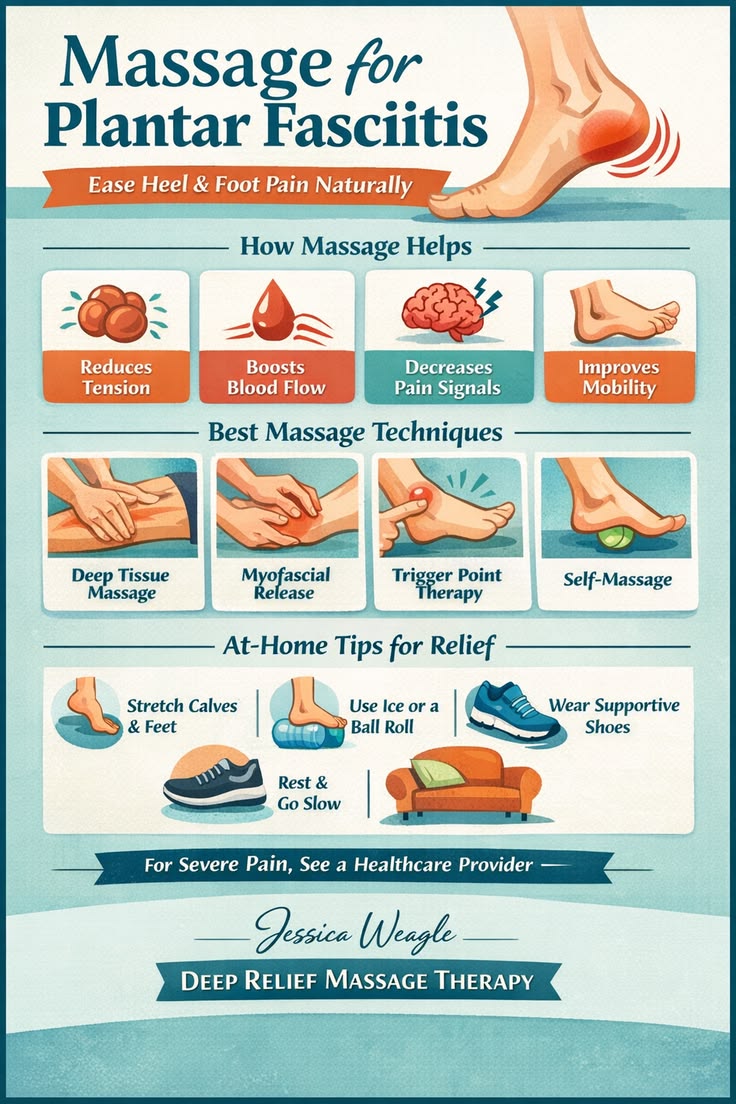
How massage helps plantar fasciitis
Massage therapy is a great option to help manage the chronic pain from plantar fasciitis. Most people don’t realize that most of the pain you are feeling in the bottom of the foot is coming from tightness from the knee down. Front and back of the leg. These muscle imbalances put a lot of extra stress on that band of fascia on the bottom of the foot. Massage is going to help increase blood flow to the area. More blood flow means faster pain relief. And loosening up all the tissue is going to help the foot move in a natural pattern. The more mobile the foot is the less pain you are going to feel.
Those clients that are chronic ankles sprainer's increase the chances of foot pain. This is because the tendons around the ankle become too over stretched over time. And the foot can handle that extra work load. So make sure you keep your ankles super strong. Strong ankles means strong pain free feet.

Best types of massages for plantar fasciitis
A common question is what type of massages help the best for plantar fasciitis? In this section I’m going to briefly go over what types of massage I suggest for this type of injury.
Deep tissue massage. It is the most popular service I offer. It is detailed focussed work. Depending on how long you’ve been dealing with the pain is going to depend on how long the session is going to take. If this has been a long time issue. Working on foot to knee only is going to take me an hour. That includes the front and back of the leg. There’s a lot of slowly working my way through the layers of tissue. Oil and lotion are used and you can come in with shorts on.
Myofascial release is pretty similar to deep tissue massage. The key differences are no oil or lotion is used. And there is more joint movement while stretching the tissue. I also still work foot to knee and just doing this type of foot work can take me an hour. There are lots of moving parts in the feet.
Cupping is another good option. The vacuum pressure really separates those deeper soft tissues. Sometimes better than what I can do with my own hands. Also can take about an hour. And just like deep tissue massage and myofascial release. I work foot to knee.
Plan on feeling sore for about 48 hours. Session frequency is for acute pain book weekly sessions. When your pain starts reducing then it’s bi-weekly. And maintenance is every 4-6 weeks. You can read more about massage frequency HERE
What to do at home
- Calf and plantar fascia stretching
- Supportive shoes or inserts
- Avoid going barefoot on hard floors
- Ice rolling after activity
- Gradual return to activity
When to contact your doctor
If your pain has not been getting better after a month. It is time to talk to your doctor. They can give you a referral to physical therapy and podiatrists. The podiatrists will be able to order imaging to make sure there are not other underlying issues happening in the foot. With physical therapy you will be giving a group of exercises to do at home to help keep the tissue loose while it’s healing. In addition to various types of soft tissue work. Just keep in mind plantar fasciitis just takes a long time for the pain to 100% go away. This is because your foot never gets a chance to rest. We use our feet all day. So rest those feet as much as you can.
FAQ
Does massage cure plantar fasciitis?
Does massage cure plantar fasciitis?
No. But it does help to manage the pain.
Is deep tissue massage good for heel pain?
Is deep tissue massage good for heel pain?
Yes. Massage helps a lot by increasing circulation to the whole foot
How often should I get a massage for plantar fasciitis?
How often should I get a massage for plantar fasciitis?
If your pain in chronic weekly. For dull pain bi-weekly. And for general maintenance every 4-6 weeks.
Massage is a valuable tool to help you maintain happy pain free feet. Anyone who is working all day on their feet can develop plantar fasciitis over time. Once you start feeling pain don't wait till your are in so much pain it feels like you are walking on glass. The sooner you start treatment the easier it is to keep your pain at a manageable level. If you are a runner like me, I wrote all about Massage for Runners . Plantar fasciitis is a common injury among my running clients.
If your are in the West Boylston, MA area and are struggling with foot pain. I am here to help you have pain free feet again. You can CLICK HERE to book your massage appointment.